Savannah drivers ask this question after almost every crash on Abercorn Street or the Truman Parkway. The honest answer depends on medical bills, lost income, and the strength of the evidence. Chatham County recorded 13,593 crashes in 2024, with 271 suspected serious injuries and 29 deaths, according to the Georgia Governor’s Office of Highway Safety.
A Savannah car accident case gets its value from documented losses, not from a fixed chart, and case value tends to reflect how much direct attention a case receives from the attorney handling it. Conn Law, a Savannah car accident lawyer founded by attorney Andrew Conn after a decade at a high stakes trial firm, takes a limited number of cases so each one receives direct attorney attention rather than being passed off to junior staff. That kind of focused caseload gives Savannah victims a clearer sense of how much attention their own case might receive when comparing legal options.
This list breaks down the seven factors that move a Savannah car accident case up or down in value, ranked from smallest impact to largest.
Number Seven Property Damage Photos
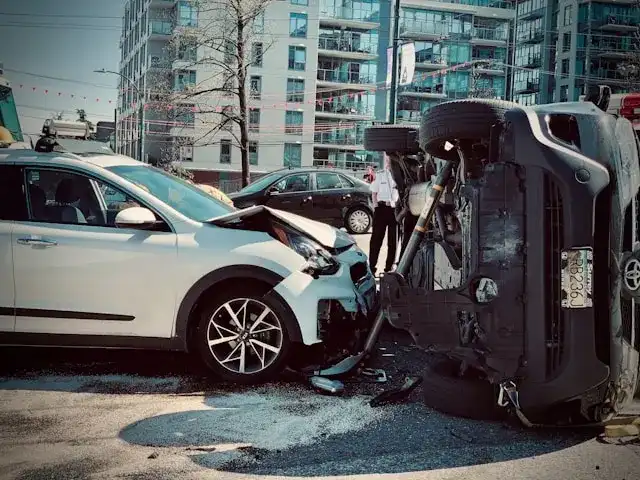
Photos of the vehicles matter less than people expect for injury value, but they still support the timeline. A 2026 pursuit crash at a Savannah intersection on Pennsylvania Avenue showed how fast property damage can escalate into a fatality claim, according to Georgia State Patrol reports. Property damage photos help an insurance adjuster picture the force of impact. Photos taken from multiple angles, including close ups of crumple zones and airbag deployment, give a clearer picture than a single wide shot ever could. From the insurance adjuster point of view, clear photos taken at the scene reduce arguments about whether the crash was severe enough to cause the injuries claimed.
Number Six The Police Report
A Chatham County Sheriff’s Office or Georgia State Patrol report gives a neutral account of fault. Reports filed within days of a 2024 collision carry more weight than statements written weeks later from memory. The report also lists citations, which insurance companies use to set an initial liability position. From a Savannah car accident lawyer’s perspective, a report that names a clear at fault driver often shortens the negotiation timeline by months.
Number Five Emergency Room and Follow Up Records
Medical documentation is where most of the dollar value gets built. Emergency departments across the country logged about 155 million visits in 2022, according to the CDC, and a large share involved motor vehicle injuries. Gaps between the emergency visit and follow up care give insurers a reason to argue the injury was not serious. Memorial Health University Medical Center in Savannah handles a large share of the region’s serious trauma cases, and records from that facility often anchor the medical portion of a claim. From a treating physician’s perspective, consistent follow up visits create a clean medical record that supports the full extent of the injury.
Number Four Lost Wages and Pay Stubs
A Savannah car accident case includes every dollar of income lost while the person could not work. Pay stubs, a letter from an employer, and tax records all support this number. Self employed workers in Chatham County need profit and loss statements covering the months before and after the crash. From an injured client’s perspective, keeping every pay stub from the months surrounding the wreck often becomes the single easiest way to prove a wage loss claim later.
Number Three Fault and Comparative Negligence
Georgia follows a modified comparative negligence rule, meaning a driver who is 50 percent or more at fault cannot recover damages. This single legal rule can eliminate a claim or cut it in half depending on the facts. Speeding was a factor in about 19 percent of Georgia’s fatal crashes according to 2023 state data. Chatham County Superior Court handles the civil trials that arise when fault cannot be resolved through negotiation alone. From a court’s perspective, the fault percentage assigned during trial or settlement negotiation directly controls the final payout amount.
Number Two Severity of the Injury
Whiplash cases settle differently than spinal injury or traumatic brain injury cases. Georgia recorded more than 9,100 traffic deaths and over 727,000 injuries between 2020 and 2024, according to the Georgia Governor’s Office of Highway Safety. Distracted driving was a suspected factor in 41 percent of Georgia’s fatal crashes in 2023. From a family member’s perspective, watching a loved one move from an emergency room bed to months of physical therapy makes clear why severity drives the largest swings in case value.
Number One Available Insurance Coverage
Even a catastrophic injury case cannot exceed what insurance and personal assets can pay. Georgia requires minimum liability coverage, but many drivers carry only the state minimum. Underinsured motorist coverage often becomes the deciding factor in whether a Savannah car accident victim receives full compensation. From a Savannah car accident attorney’s perspective, checking every available policy, including the at fault driver’s policy, any employer policy, and the victim’s own underinsured motorist coverage, usually uncovers money that would otherwise go unclaimed.
What This Means for Savannah Accident Victims
A Savannah car accident case rarely comes down to one factor alone. Insurance coverage limits, comparative fault rules, medical documentation, and lost income all combine to set the final number. Chatham County’s crash volume means local attorneys see these patterns repeat case after case, which is part of why documented recovery histories from firms in other states get referenced as comparison points for how far a well built case can go. Anyone recovering from a Savannah car accident should start gathering pay stubs, medical records, and the police report as early as possible, since these documents form the foundation of the claim long before any settlement number gets discussed.