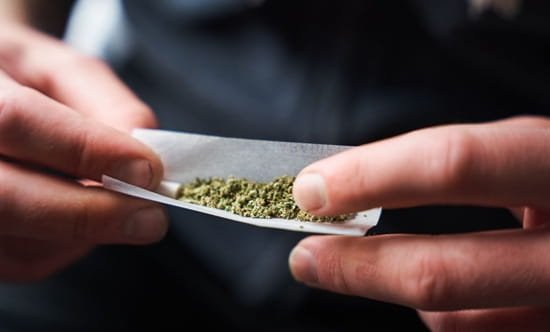
If you have been following cannabis legalization news across the United States and are wondering ‘Is weed legal in San Antonio?’, the answer may surprise you — especially if you are coming from a state with more permissive cannabis laws. As of 2026, marijuana remains illegal for both recreational and medical use under Texas state law. San Antonio, located in Bexar County and fully governed by Texas statutes, follows this prohibition strictly. However, there are nuances, recent local policy developments, and ongoing legislative debates that every resident and visitor should understand. This guide provides a comprehensive breakdown of marijuana laws in San Antonio, Texas.
The Legal Status of Weed in Texas
Texas is one of the more conservative states when it comes to marijuana policy. Unlike neighboring states such as New Mexico and Colorado — which have fully legalized recreational cannabis — Texas has maintained a near-total prohibition on marijuana. The Texas Controlled Substances Act classifies marijuana as a Schedule I controlled substance, meaning it is considered to have no accepted medical use and a high potential for abuse under state law, mirroring the federal classification.
Both recreational and broad medical marijuana use are illegal in Texas. This makes Texas an outlier in a national landscape where over half of U.S. states have legalized recreational marijuana and the vast majority allow comprehensive medical cannabis programs. In San Antonio, as throughout the rest of Texas, being caught with marijuana without a valid prescription under the narrow Compassionate Use Program can result in criminal charges.
Texas Compassionate Use Program: Limited Medical Cannabis
Texas does have a limited medical cannabis program called the Texas Compassionate Use Program (CUP), established in 2015 and expanded in subsequent legislative sessions. However, this program is far more restrictive than medical marijuana programs in most other states. Under the CUP, only patients diagnosed with specific qualifying conditions can legally obtain low-THC cannabis from a licensed dispensary.
Qualifying Conditions Under Texas CUP
As of 2025, the qualifying conditions for the Texas Compassionate Use Program include epilepsy, seizure disorders, multiple sclerosis, spasticity, amyotrophic lateral sclerosis (ALS), autism, terminal cancer, post-traumatic stress disorder (PTSD), and any incurable neurodegenerative disease. This list was expanded through Senate Bill 339 in 2021, which added PTSD and expanded the cancer provision.
THC Limits Under Texas CUP
One of the most significant restrictions in the Texas CUP is the THC cap. Originally limited to cannabis products containing no more than 0.5% THC, Senate Bill 339 raised this cap to 1% THC. While this increase was meaningful for patient access, a 1% THC cap is still dramatically lower than what medical marijuana patients in most other states can legally access. Products with higher THC concentrations remain illegal in Texas, even for registered CUP patients.
To participate in the Texas CUP, patients must receive a prescription from a physician registered with the Texas Department of Public Safety’s CUP registry, and obtain their medication exclusively from one of the state’s licensed Dispensing Organizations (DOs). In San Antonio, Surterra Wellness (now operating as Fluent) and other licensed DOs have established dispensary locations serving CUP-eligible patients.
Recreational Marijuana in San Antonio: Strictly Illegal
There is no pathway to legal recreational marijuana use in San Antonio or anywhere in Texas. Possessing, using, purchasing, selling, or cultivating marijuana without authorization under the Texas CUP is a criminal offense under the Texas Penal Code and the Texas Controlled Substances Act. Unlike some states where local jurisdictions have decriminalized marijuana, Texas has not passed any statewide decriminalization measure.
Marijuana Possession Penalties in San Antonio, Texas
Texas has some of the most severe marijuana possession penalties in the country. Here is a full breakdown of what you could face for marijuana possession in San Antonio:
- Possession of 2 ounces or less: Class B misdemeanor — up to 180 days in county jail and a fine up to $2,000
- Possession of 2 to 4 ounces: Class A misdemeanor — up to 1 year in jail and a fine up to $4,000
- Possession of 4 ounces to 5 pounds: State jail felony — 180 days to 2 years in state jail and up to $10,000 fine
- Possession of 5 to 50 pounds: Third-degree felony — 2 to 10 years in prison and up to $10,000 fine
- Possession of 50 to 2,000 pounds: Second-degree felony — 2 to 20 years in prison and up to $10,000 fine
- Possession of more than 2,000 pounds: First-degree felony — 5 to 99 years in prison and up to $50,000 fine
Additionally, marijuana convictions in Texas can result in automatic driver’s license suspension for up to 180 days, even if no vehicle was involved in the offense.
San Antonio’s Local Policy: Cite and Release
While state law remains clear, the City of San Antonio has implemented a notable local policy that affects how low-level marijuana possession is handled by local law enforcement. San Antonio Police Department (SAPD) has adopted a ‘cite and release’ approach for minor marijuana possession cases involving 4 ounces or less. Under this policy, officers have discretion to issue a citation and release the individual rather than making a custodial arrest — similar to how a traffic ticket is handled.
This policy was adopted in part due to the significant cost of prosecuting low-level drug cases and the availability of a cite-and-release option under Texas law. It does not legalize marijuana possession — the underlying offense is still a criminal misdemeanor — but it reduces the immediate impact of an arrest for small amounts. Bexar County District Attorney’s Office has also signaled a willingness to focus prosecutorial resources on more serious offenses.
However, it is critical to understand that cite and release is discretionary. An officer can still choose to make a custodial arrest for marijuana possession, and the criminal charge on your record remains the same regardless of whether you were cited or booked.
Marijuana and Drug-Free Zones in San Antonio
Possession or distribution of marijuana in designated drug-free zones in San Antonio carries enhanced penalties. These zones include areas within 1,000 feet of schools, daycare centers, youth centers, playgrounds, and public swimming pools. If you are convicted of a marijuana offense in a drug-free zone in Texas, the minimum term of confinement for the applicable charge is increased by five years, and the maximum fine is doubled. This means that what would otherwise be a misdemeanor possession charge can become far more serious if you happen to be near a school or park.
Marijuana in Vehicles in San Antonio
Having marijuana in a vehicle in San Antonio creates additional legal exposure. Texas law enforcement can use the odor of marijuana as probable cause to search a vehicle. If marijuana is found in a vehicle during a traffic stop, all occupants may face possession charges depending on where the marijuana was found and who had access to it. Constructive possession — meaning you had knowledge of and access to the marijuana even if it was not on your person — is a valid basis for criminal charges in Texas.
Future of Marijuana Legalization in Texas
Despite growing national momentum toward cannabis legalization, Texas has been slow to follow. Polling consistently shows that a majority of Texans support some form of marijuana legalization or decriminalization, but the state legislature has been resistant to significant reform. During the 2023 legislative session, several marijuana reform bills were filed but failed to advance. Advocates are hopeful that future sessions will produce more progress, particularly as more border states adopt permissive policies.
Cities like San Antonio, Austin, and Houston have passed resolutions calling on the state to decriminalize marijuana, and local prosecutors in several Texas counties have adopted low-prosecution policies for minor cannabis offenses. However, without legislative action at the state level, marijuana remains fully illegal in San Antonio.