One of the most commonly searched questions by dog owners and animal lovers looking to move to Miami is: ‘Are pitbulls legal in Miami?’ The answer is simple but often shocking to many people — no, pitbulls are not legal in Miami-Dade County. Miami-Dade has one of the longest-standing and strictest breed-specific legislation (BSL) laws in the United States, banning pitbull-type dogs since 1989. Whether you are a current resident, a prospective transplant, or a visitor planning to bring your dog, this is critical information you need to know before bringing a pitbull into Miami.
In this detailed guide, we will cover the history of the pitbull ban in Miami, which breeds are affected, what happens if you violate the ban, efforts to repeal the law, and what alternatives dog owners have in Miami-Dade County.
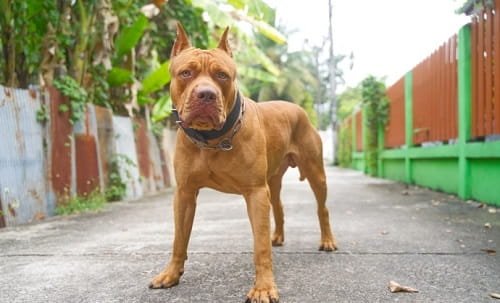
The History of Miami-Dade’s Pitbull Ban
The pitbull ban in Miami-Dade County was enacted in 1989, making it one of the earliest and most well-known breed-specific ordinances in the country. The legislation came after a series of high-profile and severe dog attacks in the area that drew public attention and political pressure for government action. At the time, pitbulls were often portrayed in the media as inherently dangerous, and Miami-Dade County commissioners voted to ban the breed as a public safety measure.
The ordinance, codified in Miami-Dade County Code Section 5-17, specifically prohibits the ownership, possession, keeping, or harboring of pitbull-type dogs in the county. It also defines which breeds fall under the category of ‘pitbull’ for enforcement purposes, giving animal control officers significant discretion.
Which Breeds Are Considered ‘Pitbulls’ Under the Ban?
The Miami-Dade ordinance defines pitbulls broadly, which is one reason it has been so controversial. Under the law, the following dog breeds and their mixes are classified as pitbulls and are therefore banned:
- American Pit Bull Terrier
- American Staffordshire Terrier
- Staffordshire Bull Terrier
- Any dog that substantially conforms to the characteristics of these breeds as defined by the American Kennel Club or United Kennel Club
This broad definition means that mixed-breed dogs that visually resemble a pitbull can also be seized and banned, even if the dog has no documented pitbull lineage. This ‘visual identification’ approach has been criticized by dog behavior experts and animal welfare organizations, who argue that breed identification without DNA testing is inherently unreliable.
What Happens If You Own a Pitbull in Miami-Dade County?
If you are found to own or harbor a pitbull in Miami-Dade County, you can face serious legal consequences. Animal control officers have the authority to seize any dog they believe to be a pitbull-type breed. Once seized, the dog is typically impounded, and the owner is given an opportunity to contest the determination or demonstrate that the dog is not a pitbull under the ordinance’s definition.
If the dog is confirmed to be a pitbull, the owner faces the following outcomes:
- Fines for violating the county ordinance — which can be substantial and increase with repeat violations
- The dog may be held in the county animal shelter at the owner’s expense
- If no successful appeal is made, the dog may be euthanized
- Owners can be required to surrender the dog to animal control permanently
- Moving the dog outside of Miami-Dade County is typically offered as an alternative to euthanasia
The Grandfathering Clause
When the ban was enacted in 1989, a grandfathering provision was included that allowed pitbull owners at the time to keep their dogs under very strict conditions. These conditions included mandatory registration with the county, sterilization, microchipping, strict enclosure requirements, muzzling when in public, and liability insurance coverage. However, this clause no longer applies to any new dogs, as all grandfathered pitbulls from 1989 have long since passed away. No new pitbulls can be legally kept in Miami-Dade County under any grandfathering exception.
Can You Challenge a Pitbull Designation?
Yes, you can challenge the county’s designation of your dog as a pitbull. If animal control identifies your dog as a pitbull, you have the right to request a hearing before a special master. You can bring documentation, photographs, veterinary records, and even DNA test results to argue that your dog does not meet the definition of a pitbull under the ordinance. DNA testing has become an increasingly popular method of challenging pitbull designations, though courts have had mixed responses to such evidence.
Some owners have successfully defended their dogs by demonstrating that they are mixes of other breeds and do not substantially conform to the pitbull definition. However, the burden is largely on the owner to prove the dog is not a pitbull, which can be a challenging and expensive process.
Efforts to Repeal the Miami-Dade Pitbull Ban
There have been multiple legislative efforts at the local and state level to repeal Miami-Dade’s pitbull ban. In 2012, the Florida Legislature passed a law that would have prohibited local governments from enacting breed-specific legislation. However, this law specifically exempted Miami-Dade County from the prohibition, allowing the county’s 1989 ban to remain in place. This was a significant blow to advocates who had hoped the state would preempt local BSL laws.
Over the years, animal rights organizations including the ASPCA, the Humane Society of the United States, and Best Friends Animal Society have campaigned against Miami-Dade’s pitbull ban, citing scientific research showing that breed is not a reliable predictor of dog aggression. Despite growing opposition, the ban has survived multiple legal and political challenges.
In 2021, Miami-Dade voters were given the opportunity to weigh in on the ban through a ballot measure. The referendum asked voters whether to repeal the pitbull ban, but the measure failed — with approximately 65% of voters choosing to keep the ban in place. This result was seen as a significant reaffirmation of public support for the ordinance, at least among Miami-Dade voters who participated in the election.
What Are the Alternatives for Pitbull Owners in Miami?
If you own a pitbull and are considering moving to Miami-Dade County, you essentially have two options: rehome your dog before moving, or choose to live in a different Florida county that does not have a pitbull ban. Most other Florida counties, including Broward, Palm Beach, Orange, and Hillsborough, do not have breed-specific bans, and pitbulls can be legally owned in those areas with proper care and licensing.
Some pitbull owners choose to live just outside Miami-Dade County limits and commute into Miami for work. It is important to understand, however, that bringing your pitbull into Miami-Dade County — even temporarily — can technically be a violation of the ordinance.
The Broader Debate: Are Breed Bans Effective?
The scientific and animal behavior community is largely critical of breed-specific legislation. Organizations including the American Veterinary Medical Association (AVMA), the Centers for Disease Control (CDC), and the National Canine Research Council have all concluded that BSL is an ineffective approach to reducing dog bites and attacks. Studies show that dog aggression is influenced far more by factors such as owner behavior, training, socialization, abuse, and neglect than by breed alone.
Despite this, Miami-Dade County’s ban remains in place, driven by public opinion rather than scientific consensus. The debate over breed-specific legislation continues nationwide, with cities like Denver and Calgary also having historical BSL laws that have faced ongoing controversy.